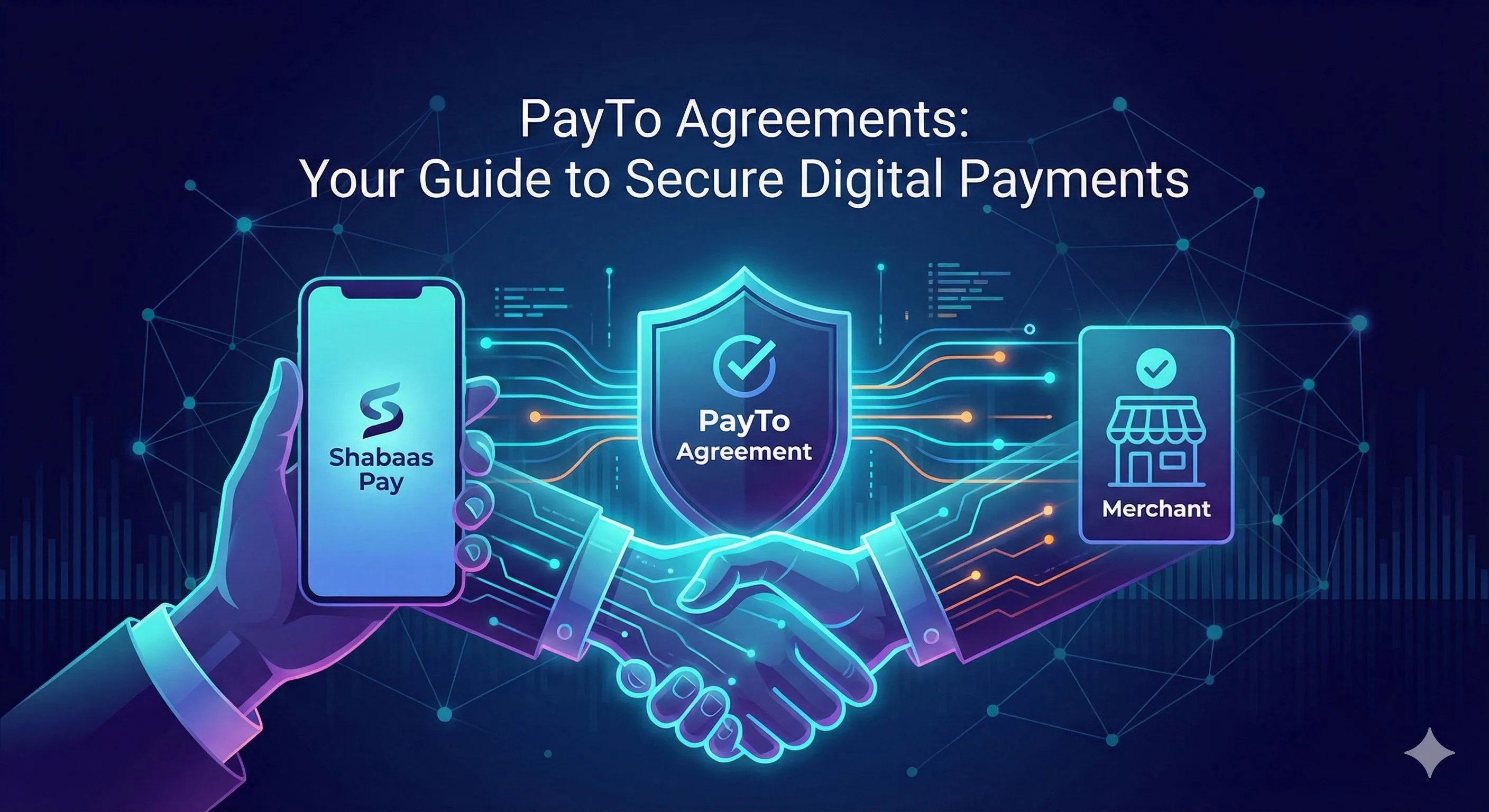
Key Takeaways
- Customers approve a PayTo agreement once
- Businesses initiate payments within agreed limits
- Agreements can be paused or cancelled anytime
To understand how PayTo works more broadly, refer to our guide on What is PayTo.
What is a PayTo agreement
A PayTo agreement defines who can collect payment, how much can be collected, how often payments occur and for what purpose. It replaces paper based direct debit authorities with a real time digital consent flow.
How PayTo agreements work step by step
- Business creates a PayTo agreement request
- Customer reviews the agreement details
- Customer authorises the agreement via their bank
- Agreement becomes active
- Business initiates payments under the agreement
What businesses can control in a PayTo agreement
- Maximum payment amount
- Payment frequency
- Agreement duration
- Payment description and purpose
These controls reduce disputes and failed payments.
How customers manage PayTo agreements
Customers can:
- View active agreements in their banking app
- Pause agreements temporarily
- Cancel agreements at any time
- Receive notifications for changes
PayTo agreements vs direct debit authorities
PayTo agreements provide real-time status visibility and clearer consent compared with traditional direct debit authorities. Successful payments are generally processed in real time for eligible accounts, subject to payer institution, account and security checks.
For businesses comparing payment options, our PayTo vs PayID guide explains the key differences between these Australian payment methods.