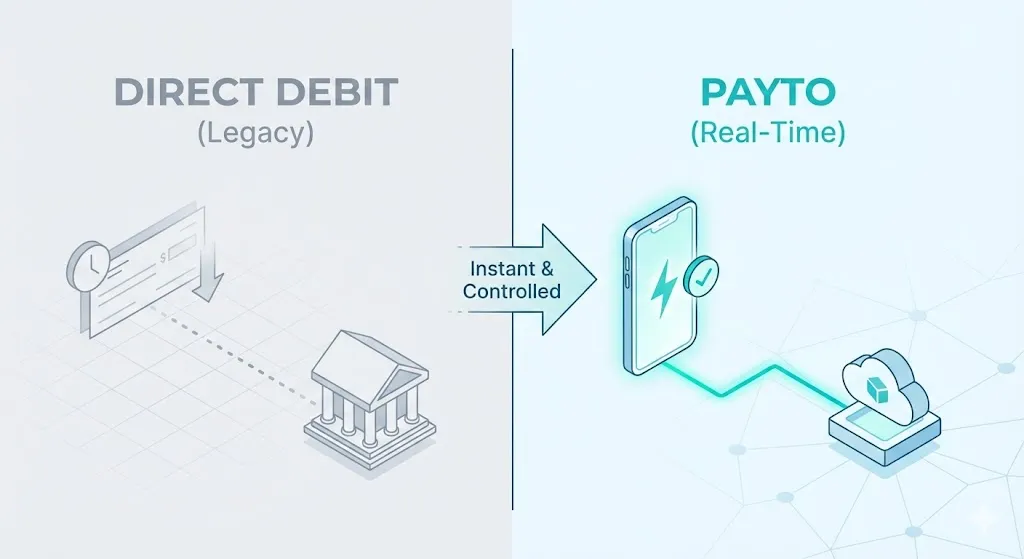
Key Takeaways
- PayTo provides real time settlement
- Direct debit relies on batch processing
- PayTo offers stronger customer control
Understanding PayTo agreements is essential when comparing these payment methods. For platforms considering API integration, refer to our guide on PayTo API for platforms.
What is direct debit
Direct debit allows a business to pull funds from a customer account based on a paper or digital authority. Payments are processed in batches and disputes are often handled after the transaction.
What is PayTo
PayTo is a real time authorised payment framework that allows businesses to initiate payments once a customer has approved a digital agreement.
PayTo vs direct debit comparison
| Feature | PayTo | Direct Debit |
|---|---|---|
| Settlement speed | Real time settlement | Batch settlement |
| Customer consent | Explicit customer approval | Limited customer visibility |
| Payment controls | Agreement based controls | Manual authority management |
| Payment failure rates | Lower payment failure rates | Higher failure and dispute rates |
| Status | Modern replacement for direct debit | Traditional payment method |
Why businesses are moving from direct debit to PayTo
Businesses adopt PayTo to:
- Improve cash flow
- Reduce disputes
- Increase payment success
- Provide better customer experience
Is PayTo a complete replacement for direct debit
For many recurring and authorised payment use cases, PayTo is a strong alternative. Some legacy systems may still rely on direct debit, but PayTo adoption is increasing across Australia.
Ready to adopt PayTo for your business? Book a demo with our payments team to learn how PayTo can improve your payment operations.