Key Takeaways
- PayTo agreements can be paused and resumed, giving customers and businesses flexible control over payment schedules.
- Cancellation ends the agreement entirely and should be treated as immediate for future collections.
- Amendments to payment amounts or schedules may require the customer to reauthorise through their bank.
- Disputes should be supported by a clear audit trail of consent and payment references.
- Every lifecycle event should be logged for compliance, support and reporting.
What agreement management means in PayTo
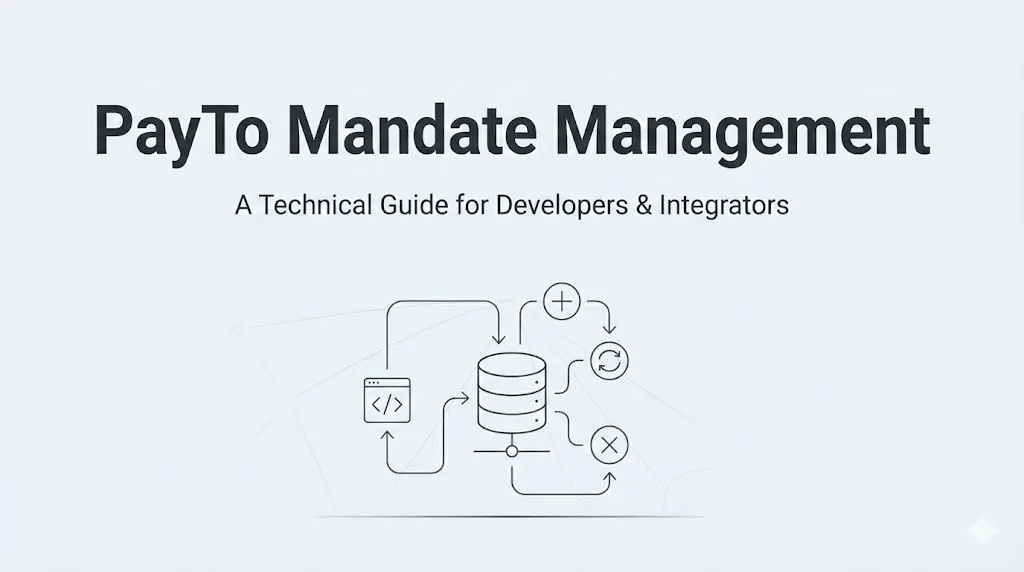
Agreement(mandate) management refers to the full lifecycle of a PayTo agreement from creation through to completion or cancellation. Each agreement passes through defined states including active, paused, amended and cancelled. The customer, their bank or the initiating business can trigger transitions between these states depending on the scenario. Understanding these states is essential for building reliable payment operations.
Pause vs cancel: when to use each
Pausing an agreement is appropriate when the customer or business wants to temporarily stop collections without ending the relationship. This is common in utilities where a customer is between properties, in SaaS when a subscription is on hold, or in marketplaces where a seller is inactive. Cancellation should be used when the agreement is no longer needed. Businesses should design their systems to reflect the difference clearly so that support teams and customers always understand the current state. For a detailed look at how PayTo agreements are structured, see our dedicated guide.
How changes work
When a business needs to change the amount, frequency or other material terms of an agreement, the customer is typically asked to reauthorise the updated terms through their bank. This protects the customer and ensures ongoing consent is genuine. Not all changes require reauthorisation. Minor metadata updates or internal references can often be updated without customer involvement. Businesses should clearly document which changes are material and which are not, and build workflows that route changes through the right path automatically.
Disputes and exceptions
Common dispute reasons include unauthorised payments, incorrect amounts or duplicate collections. Businesses should maintain an evidence package for each agreement including the original consent, any amendments and all payment references. Good customer communication before and after each collection reduces disputes significantly. Compared to direct debit, PayTo provides stronger consent visibility which can make dispute resolution faster and more transparent.
Recommended platform design
A well designed mandate management system should include a complete event log for every agreement, webhook handlers for each state transition, idempotent processing to prevent duplicate actions and automated customer notifications for pauses, cancellations and amendments. Support teams should have playbooks for common scenarios and easy access to the agreement history. For engineering teams building integrations, our PayTo API for platforms guide covers the technical foundations.